Avoidant/Restrictive Intake Disorder (ARFID)
Does your child eat only a very small number of foods, become extremely anxious around new foods, or avoid eating in situations outside of home?
Maybe you've spent years hearing, "They're just a picky eater," but you know it's much more than that. Your child may become overwhelmed by certain textures, smells, temperatures, or appearances of food. They may gag, panic, refuse meals, or become extremely distressed when unfamiliar foods are introduced.
If this sounds familiar, I want you to know—you are not alone, and this is not the result of poor parenting.
ARFID (Avoidant/Restrictive Food Intake Disorder) is a recognized eating disorder. It isn't about wanting to lose weight or concerns about body image. Instead, children with ARFID often avoid foods because of sensory sensitivities, fear of choking or vomiting, anxiety, previous negative experiences, or an extremely limited number of foods they feel comfortable eating.
Living with ARFID affects much more than nutrition. It can make school lunches stressful, birthday parties difficult, vacations challenging, and family meals emotionally exhausting. Many parents tell me they constantly worry whether their child is getting enough nutrition to support healthy growth and development.
At Kendra's Kustom Nutrition, my goal is never to pressure your child to "just eat it." Instead, I create a supportive environment where your child can gradually build confidence around food while protecting their nutritional health and respecting their individual comfort level.
Every child's experience with ARFID is different. That's why I take time to understand your child's eating history, sensory preferences, medical history, family routines, and overall health before developing a personalized nutrition plan.
Together, we may work on:
- Expanding accepted foods gradually and without pressure
- Understanding sensory challenges and food-related anxiety
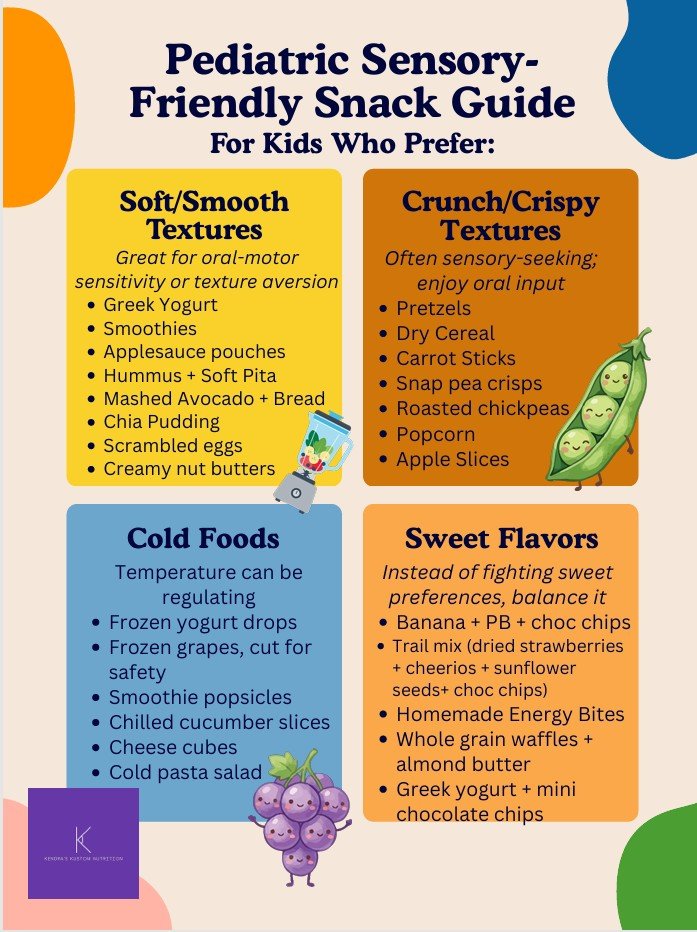
- Meeting nutrition needs using foods your child currently tolerates
- Identifying and addressing nutrient deficiencies
- Supporting healthy growth and development
- Reducing anxiety surrounding meals and new foods
- Improving confidence at school, restaurants, birthday parties, vacations, and other social situations
- Creating realistic strategies that fit your child's pace and long-term goals
Because ARFID often affects more than nutrition alone, I believe treatment works best when everyone is working together. When appropriate, I'm happy to collaborate with your child's pediatrician, therapist, psychologist, psychiatrist, occupational therapist, speech-language pathologist, gastroenterologist, feeding therapist, or other healthcare providers to provide coordinated, comprehensive care.
Parents often carry an enormous amount of stress and guilt while caring for a child with ARFID. My goal is to help relieve some of that burden by providing education, practical strategies, and ongoing support. Together, we'll focus on creating positive experiences around food rather than increasing pressure or conflict.
Recovery isn't about forcing children to eat foods they're afraid of. It's about helping them gradually build confidence while protecting their physical health and emotional well-being.
Your child deserves to participate in birthday parties, school lunches, vacations, holidays, and family dinners without food becoming the center of every experience. Together, we'll work toward helping meals become less stressful, nutrition become more balanced, and everyday life become a little easier for your entire family.